Tuesday, April 8, 2014

Captain America: The Winter Soldier - Geopolitical History, Secret Combination Conspiracy, and the Hard Price of Freedom.


Captain America: The Winter Soldier
Captain America: The Winter Soldier is by far the best Marvel superhero movie produced to date. Yes, I have seen Iron Man and The Avengers, and the fact that I have does not change my opinion. There are many reasons to love the new Captain America movie, ranging from the excellent action scenes, the stellar cast (DC can learn from Marvel on casting choices), the stylistic tone, and the overall production value. However, the thing that I enjoyed most about this film was the perfect blend of post-modern 9/11 national security concerns with post-WW2 geopolitics and conspiracy. I would like to discuss some of these issues as presented in the film and as compared to its real-life counterpart. For these reasons, I believe Captain America: The Winter Soldier has much more to say about our current state of affairs than any other movie out there right now, as ridiculous as that might sound . . .  it’s going to get even more so after you read this.
In discussing the convergence of ideology and forms of mass communication and production the noted propaganda expert and author Edward Bernays stated:

“This is an age of mass production. In the mass production of materials a broad technique has been developed and applied for their distribution. In this age, too, there must be a technique for the mass distribution of ideas.” Manipulating Public Opinion,” American Journal of Sociology 33 (May, 1928), p. 958-971.

In his seminal work, entitled “Propaganda” Bernays made a series of arguments about the use of what might be termed “propaganda” by those who have the ability to mass produce, or provide mass produced information to the general populace. Bernays regarded this methodology as an old technique used throughout time to shape opinion and give context and form to time and space. Essentially, without information and its propagation, he explained, there would be nothing for man to be concerned about because nothing would be of concern.  In establishing the field of public relations he stated that its “three main elements,” were: informing people; persuading people; and/or integrating people with people through the use of persuasive information. Crystallizing Public Opinion (1923).

If Bernays were still alive he likely would have seen the fulfillment of his thesis and the evidence of its effectiveness in the yearly Hollywood Blockbuster season. The first movie out of that gate is Captain America and it is certainly not short on themes, messages, symbolism, and metaphorical application today.

HYDRA and the Bavarian Illuminati

The Ultmate Secret Combination
The story revolves around nearly a century year old conspiracy by the Marvel Comic Universe’s ultimate secret combination, HYDRA. In the Marvel comic universe HYRDA is a criminal organization dedicated to the establishment of a fascistic world government in the veins of the Bavarian Illuminati’s New World Order. HYDRA attempts to achieve the overthrow of governments, institutions, and all order through the destruction and disintegration of normative values and institutions through the chaos of terrorism, espionage, and the implementation of subversive propaganda.  HYRDA was formed by Baron von Strucker a comic book villain who has striking similarities to the arguably most famous benefactor of the Bavarian Illuminati and all of its subsequent conspiracy organization offshoots. The Wikipedia entry for Baron von Strucker states:

“Born in the late 19th century to a Prussian noble family who had relocated to Strucker Castle in Bavaria following the Franco-Prussian War, Wolfgang von Strucker . . . fought for Germany during World War I . . . joined the Nazi Party, becoming infamous in the following years. In 1963 he and Geist, one of Hitler’s top men, allied themselves with the Egyptian mentalist Amahl Farouk (secretly the Shadow King) in an attempt to dispute the lineage of England’s royal family and install a new king who would be sympathetic to the Nazis.”
Wikipedia, Baron von Strucker.
Baron von Strucker
In the first Captain America movie we get a sense of the founding of HYDRA under the movie’s primary antagonist, the Red Skull. In the first the movie the Red Skull is seen as the fanatical leader of HYDRA with his ultimate goal of world domination on a scale and through a power reserved to the fantastical. Through the manipulation of the “tesseract” Red Skull ushered in the age of energy weapons just prior to the development of atomic and nuclear based weaponry. Interestingly enough the symbolic threads that underlie and interweave with the mystical premises of the existence of such supernatural power as derived from the “cosmic cube" or the “tesseract” also formed the basis of Adolph Hitler’s belief in the occult. It is fairly common knowledge now that Hitler was thoroughly engaged in occult beliefs, rituals, and some speculate that his vision, abilities, protection, and persuasiveness  throughout his life was due to his beliefs and their potential for practical reality.  Regardless of the reality of such a power and its derivations, it is well documented that the many of the top Nazi officials held and practiced occult beliefs and conducted rituals in connection with their political ideology to varying degrees.

Nazi Occultic Symbolism
Whatever the case, the Captain America movies recognize the idea that often what may be considered “supernatural” is simply a form of advanced technology that humans are currently unable to fully understand.  This is demonstrated by a response to a Nazi officer questioning his goal to “end this war through magic,” to which the Red Skull replies, “[s]cience. But I understand your confusion. Great power has always baffled primitive men.” Heinrich Himmler believed that through his machinations with the SS, he could breed a pure Aryan bloodline which had the power of the gods of Atlantis, the rhetoric, runes, and rituals he used for that purpose is very well documented. The underlying premises shouldn't sound so far fetched given this reality and the very real prospect of success such a worldview nearly entailed.

The Cosmic Cube Representing the Power of the Gods
 The New World Order as defined by one analyst recognizes the historical ideology that underlies the enlightenment era flourishing of scientism and its correlating ushering in of a secular new age for all mankind. In describing this New World Order he states:

“The New World Order is a global crime syndicate of elite bankers, CEOs, politicians, academics, media moguls, military executives and religious heads, that operate on the one hand in the public purview promoting a stated policy, while simultaneously working underhandedly in clandestine societies to set an alternate world policy. . . [t]here are different degrees of initiates and levels of knowledge, but the central ideology of the NOW is Fabian socialist technocracy and eugenics.”
Jays Analysis, What is the New World Order and Why does it Matter?

Novus Ordo Seclorum
While I don’t have the time or space to go through the many levels of connections needed to make such a bold claim, suffice it say that many writers have supported these types of overarching secret combination claims through money trails, political connections, ad hoc analysis of monetary policy, development of governments, declassified military and black op documents, inside leaks, and political and cosmological philosophical convergence of elite individuals. All of these types of evidence are fairly conclusive in suggesting, despite the way popular media has suggested, that conspiracies do take place, and that influential and powerful individuals with the means necessary for fraternal, governmental, and institutional conspiracy are available and attractive. Regardless of whether one believes in that possibility, this is the story that is given to us in Captain America.

The Bavarian Illuminati in contrast was said to have been formed in 1776 by an ex-Jesuit named Adam Weishaupt in Bavaria. His primary reason for the establishment of the Illuminati, which essentially means “the enlightened,” was to organize a group of like-minded rationalists to move the world to a one world socialistic order where religion would be abolished and a new “science” would take its place as the reigning worldview. This period of time was known as the enlightenment and represented a socio-cultural revolution that sought to remake the social order, which had since been based on either legalistic notions of Judaic revelation, or other theistic /authoritarian principles. This new view placed its emphasis on the origins of humans based on evolutionary theory and its related scientific assumptions regarding the nature of truth and natural law. The shift saw the removal of a world governed by God through his earthly hierarchy and those with the divine right to kingship, but instead based on man’s ability to dominate and control the natural world through the use of reason and technological know-how. It was believed that man would achieve encyclopedic knowledge through the lens of his observations and quantification methodologies such that he would be able to achieve total understanding of the universe and become god in his own right and by his own power. 

The Titan Prometheus Stealing Fire from the Gods
One can see the influence of Greek philosophy (particularly Prometheus) in this worldview both as a result of the skepticism with which much of that worldview begins with by assumption and based on its observation of the natural world. However, it can be argued that this scientific worldview, given its reliance on unsupported first premises must also yield to the limitations of mans limited reasoning ability and the imperfections of his observations, must also fall short of such a universal goal and understanding. In that regard it could be argued that science and all its assured certainties is the new mythology, the all-encompassing narrative (akin to the creation account in Genesis) which could explain all in god like fashion. The very pillars of this mythology, Galileo, Newton, and Bacon, have also been said to be practitioners of a form of occult beliefs known as hermeticism which relies on manipulation of nature through alchemy, astrology, and theurgy.  The last of which, means the conducting of rituals to invoke the power and presence of Gods for a desired outcome, essentially theurgy is classified as “magic.” The modern student of scientific inquiry has been led to believe, based on numerous assumptions that rationalism has always been disconnected from any supernatural influences, but such an empirical worldview is rather new in terms of the development of its own conclusions. Many would be shocked to see that Bacon, Newton, Galileo, Freud, Marx, and others practiced such beliefs while maintaining secular outward appearances.  This was the age of the birth of the new world, out of it came the reformation under Luther, in which religion (specifically Christianity) was freed from its authoritarian catholic roots such that sectarian religions could form and reinterpret the word and craft it to their liking, needs, or purposes. Also, the American and French Revolutions. Particularly, the French revolution leaders were documented members of illuminati orders that sought to overthrow the established social orders. In the American Revolution, George Washington was aware of the illuminati’s influence in world politics and its infiltration in the United States. Of that conspiracy he stated:

"It is not my intention to doubt that the doctrine of the Illuminati and the principles of Jacobinism had not spread in the United States. On the contrary, no one is more satisfied of this fact than I am. The idea that I meant to convey, was that I did not believe that the Lodges of Free Masons in this Country has, as Societies, endeavored to propagate the diabolical tenants of the first, or pernicious principles of the latter (if they are susceptible of separation). That individuals of them may have done it, or that the founder, or instrument employed to found, the Democratic Societies in the United States, may have had these objects; and actually had a separation of the People from their Government in view, is too evident to be questioned."
George Washington, Letter to George Washington Snyder, October 24, 1798, Mount Vernon, in The Writings of George Washington, vol. 20, p. 518.

Not only is it alleged that the Illuminists influenced many other revolutions taking place around the world throughout the two centuries in furtherance of the NWO but that they had achieved near complete control through the establishment of the worlds monetary, credit, and lending institutions.  In his seminal book, “None Dare Call it a Conspiracy,” Gary Allen makes a persuasive, if not undeniable argument that the Bolshevik Revolution was influenced by Illuminist principles, backed by illuminist money, and led by illuminist members, including Vladimir Lenin himself. While most would see a conflict between Communist regimes and the supposedly democratic free regimes of the West, many analysts including Allen, Joel Skousen, and KGB defector Anatoliy Golitsyn (to name only a few) see the revolutionary aspects of these political movements as different sides of the same fascistic coin. Further, that coin is imprinted with one man’s legacy, that of the Baron Nathan Rothschild. 
Baron Nathan de Rothschild (b
Baron von Rothschild . . . err Strucker and SHIELD as the OSS/CIA
The Rothschild family is one of the elite familial bloodlines mentioned above that appears through its many associates and relatives in all of the major anglo-american-british political and economic power positions of the last two centuries. The Rothschild family is known as one of the wealthiest families in history and the fortune was made through the lending of money to nations for financing their wars and then establishing a central bank in that country for lending of fiat money. This means that the nations where these private banks were established were backed by private fortunes, and bankers would charge the governments interest on the money that was printed as reserve currency notes. This would be in contrast to trading of currency with intrinsic value, like gold or silver. The expansion of these banks under the control of a few well connected families, including the Rothschilds, the Astors, the Morgans, and the Rockefellers, (among others of intermarried and political connection) would see the establishment of a world reserve currency in the United States dollar and the regional monetary currency in Euro of the European Union. In 1913 the U.S. economy was placed in the hands of these bankers, founded in the City of London, through the passage of the Federal Reserve Act (For an excellent treatment of this process check out The Creature of Jekyll Island by G. Edward Griffin). Also, arising from the same network of individuals and institutions was the Round Table Group, which saw many of these individuals in global positions of influence, actually meet together for the furtherance of world geopolitics. Out of these groups emerged other political think tanks and organizations like the Council on Foreign Relations, the Trilateral Commission, the British Round table. These groups were largely responsible for the creations of the intelligence networks of the western government establishments including MI6, the OSS, which was the precursor to the CIA as touched on below. 

Carrying the torch of the Illumanity through Global Political Control?
There are plenty of books on the subject of the establishment of the CIA as well as movies that document the secretive and elite nature of the founding of the intelligence branches of the American government. From an entertainment perspective the movie The Good Shepard starring Matt Damon offers a reveal as to the governmental forces underlying the establishment of the OSS and later the CIA. In that movie Matt is pursued as an initiate into the founding of the organization and is introduced to the elite Skull and Bones society of Harvard, of which all the founding members of the OSS belong. This brings me back to Captain America.

CIA Previously OSS
After the seeming defeat of the Red Skull at the hands of Captain America, we learn that HYDRA wasn’t actually destroyed but its ideological and practical core was transplanted to the United States of America through “Operation Paperclip.” The thing that is very interesting about this movie is how well all the conspiracy theory threads that underlie the origins of  actual intelligence apparatus of the United States government are represented. To those who aren’t familiar with Operation Paperclip, it might seem like a random name thrown into the script for the purpose of telling a fictional comic book story, but Operation Paperclip was an actual secret operation undertaken by the U.S. government to recruit German Nazi scientists to work for the U.S following WW2.  

"HYDRA" came to work for the U.S. government
All of the scientists had their previous support of the Nazi regime overlooked, were issued new backgrounds, and were granted security clearances by the U.S. government to work on a number of research and development projects. Many of these programs dealt with missile based weapons development, but there were others that dealt with all sorts of experimental procedures including torture, brainwashing, and mind control. More on this later. However, prior  to WW2 the U.S. didn’t have a dedicated intelligence agency or network like we do now, the very thing that this movie elaborates on as regarding the formation of the intelligence apparatus known as SHIELD. Prior to WW2 all of the espionage and intelligence gathering activities were compartmentalized in the separate military branches.  It was during WW2 that the Office of Strategic Services (OSS) was established and which later became the Central Intelligence Agency. There are a lot of interesting details regarding the founders of the OSS and their various political connections with other founding members and further their connection to alleged elite bloodlines stemming from the founders of the Bavarian Illuminati as I’ve somewhat detailed above. But like before there is so much information and seeming coincidence there, that I am unable to get to in just this one post, but suffice it to say that many of the prominent individuals and families responsible for the establishment of the OSS and later the CIA all belong to a very small network of associated individuals and institutions which ultimately converge in the Anglo-American- banking establishment (for a detailed account of this establishment and its relationship to the NWO read Caroll Quigleys seminal work, "Tragedy and Hope").

Anglo-American Financial-Intelligence-Military-Industrial Complex
In Captain America, HYDRA can be seen as the corollary to the Bavarian Illuminati and its various permutations and institutions in the modern age, ending with the “skynet” type program known as “Project Insight” as instituted by the World Security Council and in particular Robert Redford’s character Secretary Alexander Pierce. In the movie is asserted that HYDRA through Doctor Armin Zola (from the first movie) was recruited under Operation Paperclip for the specific purpose of creating a system whereby mankind would give up its freedom for security in the form of a military-intelligence-industrial complex.

Nazi-Occult Experimentation
 Remember, that HYDRAs original plan was world domination, and its first attempt was to achieve that by force. Ultimately, thanks to Captain American it failed, but he learns that through Dr. Zola and other HYDRA agents recruited through paperclip, the plan was changed and adapted for the same long term objective, but to be achieved through more clandestine means.  This narrative parallels very well with what Anatoliy Golistyn an ex-KGB agent revealed regarding the dissolution of the USSR. Prior to and after WW2 it was clear that Communism and democracy were going to be at odds, especially given the nature of the interests involved, and the ideologies underlying them. The common misperception, according to Golitsyn, as detailed in his two books, “New Lies for Old Lies,” and “Perestroika Deception,” was that the collapse of the USSR did not end the goals of Communist Russia for world domination as argued by Marx, Engels, Lenin, Stalin, and Kruschev. As mentioned before, the NWO has been established as being the benefactor of the Bolshevik revolution that led directly to the Communist leadership and regimes of both Lenin and Stalin and allowed its related worldview to propagate. The next several decades would be seen as the Cold War, pitting the two world-views against each other until the brink of WW3.  In his books, Golitsyn makes the claim that the Communist leaders knew they would never be able to defeat America by strength of military force and would have to resort to more long term tactics including espionage, creating internal weakness, and ideological shifts that would make it easier to eventually militarily dominate America.  There have been several statements that indicate this mindset including Stalin’s view that “[a]fter Russia we will take Eastern Europe, then the masses of Asia, and then we will encircle the United States which will be the last bastion of capitalism. We will not have to attack. It will fall like an overripe fruit into our hands.” Khrushchev echoed the same communist sentiment when he allegedly stated, “[y]ou Americans are so gullible. No, you won’t accept Communism outright, but we’ll keep feeding you small doses of socialism until you’ll finally wake up and find you already have Communism. We won’t have to fight you. We’ll so weaken your economy until you’ll fall like an overripe fruit into our hands.” Also, those who were alive during the most heated moments of the Cold War remember him stating that Russia would “take America without firing a shot . . . we will bury you!” Golistyn makes the claim that the collapse of the Iron Wall was nothing more than a ploy to bide time for Russia to return to military and economic security, and to infiltrate American government and society. This was to be accomplished on a number of fronts, including the growth of statism in the form of socialism, the abolition of private property, and free market capitalism, and the secularization of society through education and legal precedent. One can see the list of Communist Goals as read into the Congressional Record for evidence of the goals of Communists at that time to infiltrate all aspects of U.S. government and society for the eventual world domination ends described above. Communist Goals (1963) Congressional Record –Appendix, pp. A34-A35, January 10, 1963.

No End to the Cold War
The importance of these details is to not necessarily to suggest that the Russian government is the NWO or that in the context of the movie that it represents HYRDA but only to establish a connection with the concept of complete infiltration of the U.S. intelligence sectors by clandestine agents for the purpose of complete overthrow and domination by military strength of force. The metaphor that the movie gives is that of the police state through the skynet type system, and the NSA-like intelligence and massive data mining currently being conducted on American citizens. Additionally, the Russian connection is important for the understanding of the role of the Winter Soldier.

The Winter Soldier

Red Star  Symbolism of Communism
The Winter Solder the NWO/Communist Manchurian Candidate
The Winter Soldier in the comics is essentially the same character that is portrayed in the movie with the difference being that he is a Russian black ops agent instead of originally and solely a HYDRA agent. This movie focuses on his role as the anti-Captain America and the enforcer for all the secret black ops missions HYDRA has perpetrated throughout history to get it to the point where Americans would freely surrender their liberties for the security of skynet. It is insinuated that HYDRA and the Winter Soldier have been engaged in black ops missions like the JFK assassination, the communist regimes in Cuba and Latin America, and it is implied in the post 9/11 context as well with regard to terrorism and drone strike capabilities. It is interesting that during the height of the Cold War the same allegations were being thrown around regarding the workers’ rights movements and the communist actions in Cuba, China, Vietnam, and Korea. Each of these particular engagements the U.S. was involved in some sort of way in allowing communist influences to gain or remain in power. There was a lot of resentment in several of these instances for policy positions made by powerful political figures  in the U.S. government for not intervening when possible or making decisive actions in turning back communist movements. Some assert that this was due to the infiltration of the U.S. government with sympathetic or outright Communist spies and agents that were bringing to pass the Perestroika Deception and weakening of American influences at home and abroad. Whatever the case, the movie makes the similar claim that HYDRA has been playing this game and using the Winter Soldier for that purpose.

Mind-Controlled Assassin
Another interesting aspect of the Winter Solider is the brainwashing/mind-control dynamic. As stated above following WW2, both sides of the Cold War conflict were engaged in complete competition, with both trying to secure Nazi scientists for the purpose of arms development, and other technological advancements. One of the lesser discussed experiments that have  become declassified to a minimal extent is that of Project Artichoke, later changed to Project MKULTRA. 

Project ARTICHOKE/MKULTRA
Under these projects and likely many more that have not become declassified, the goal was to perfect mind-control techniques for the purpose of espionage and black ops. The popular notion of the Manchurian Candidate is how the popular media has portrayed the minimal revealed information about these projects, in that the goal was to create soldiers who would be triggered to carry out espionage activities. 
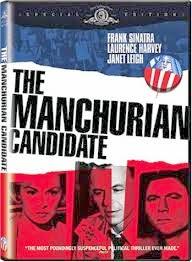
Denzel?
Particularly, popular culture has focused on the aspect of the project for the purpose of creating assassins. This can be seen in almost any modern day action movie in one form or another. The general principles underlying all of these depictions and the ones that track with the actual declassified documents are essentially similar. Basically, you take a person, and you torture them until their mind becomes "fractured," it is documented that when individuals experience severe physical and psychological trauma that their mind is able to dissociate from the pain and compartmentalize it to deal with it. It is said that this process allows a fracturing of the individual’s primary psyche such that new one can take its place and conditioned to act in programmed ways through a process of operant and behavioral triggers. It is said that Pavlov’s dog was one of the founding studies used to support experiments on humans in this project. It has also been well documented that such a process does in fact exist and that dissociate identify disorder and a number of other bi-polar disorders may have roots in that process.  Whatever the case, Hollywood has fully bought into this idea as it’s a mainstay of action and thriller movies which exhibit some aspect of this concept. For example the Bourne Trilogy, the Manchurian Candidate, Inception, Conspiracy Theory, The Butterfly Effect, Sucker Punch, Salt and many other movies and TV programs that have programmed killers. The Winter Soldier is shown to be a product of MKULTRA like techniques as he has lost all memory of who he was and is, and that loss of identity seems to be induced through one of the primary methods used in MKULTRA, that of electroshock therapy. 

Electroshock Therapy/Lobotomy
When Bucky Barnes first starts to remember who he is through the intervention of Captain America, he starts to recover lost memories and is then forced by his handlers to undergo a reprogramming procedure to wipe his mind and  revert him back to his basic programming for assassinations. There have been many conspiracy theories that assert that the  “patsies” of major assassinations were under mind-control techniques and were programmed to carry out those specific missions. Many cite the connections of these perpetrators to military service, or research based on psychological studies and institutions and individuals with unusual governmental and military connections. Whatever the case, the theme of the Manchurian Candidate is extremely strong in popular culture in modern times, while gaining its ideological and philosophical roots from WW2 and Cold War era paradigms. 

Project Insight and NSA “Skynet”
Ultimately the movie settles for the idea that HYDRA as a seemingly NWO-like (Dr. Zola actually calls its end goal the ushering in of the New World Order) institution has permeated all of modernity and seeks to dominate it through the use of an algorithm designed to identify potential threats to the established order. The type of institution it reverts to never really seems to be discussed with much clarity, or in the sense of overt evil ideology, other than pairing it with HYDRA which we know from before is bad. However, the evil of such an institution has a long history in dystopian and apocalyptic literature and movies. For such reference we have George Orwell's 1984, the Matrix, the Hunger Games, Terminator, and the Book of Revelations triune of Evil. It's counterpoint is also apparent as the main concern seems to revolve around somewhat vague notions of “liberty,” and “freedom.” Most American’s relate to these concepts in a way that is unique from the rest of the world in very particular ways because of our fairly insulated history and its Constitutional foundations. Most American’s understand that Freedom and Liberty as underlying our institutions are not merely  relativistic or secular types, but ones that have as their base in a moral rightness, fixed in more or less absolute terms. It is on this basis that the general populace has looked at other nations with the desire to help institute a similar form of “democracy.” Captain America plays on this theme more in the first movie, with the notion that the old-fashioned concepts and notions of freedom and liberty do not change and that they are founded in a moral sense of right action, behavior, and ideology. Captain America is faced with several ideological enemies in this sequel, as I mentioned above, with the corollaries arguably paralleling our day in ways that most people haven’t thought or grasped in such detail. What if the U.S. government had been infiltrated by HYDRA like operatives whose goal is to enslave rather, and gain power over the masses through ideological manipulation, until the breaking point of installation of a massive spying and integrated military weapon system?

Project Insight/Skynet
That breaking point in the movie is based on the algorithm developed by Dr. Zola which will predict who will ultimately become a threat to the NWO  and eliminate that threat, preemptively and efficiently through drone-like-strikes from the sky. The algorithm, it is purported, takes into account every single persons informational identity through internet searches, cellphone data, historical, educational, and informational (social security numbers) data, then collating all that information and forming a “profile,” and a threat assessment. The climax of the movie sees HYDRA revealed for what it is, with Captain America and his allies, Nick Fury, Black Widow ( I heart Scarjo) and Falcon (Poppa Doc, awesome)  attempting to bring down the whole system, including SHIELD as an institution.  It is shown that not all of the agents of SHIELD are members of HYDRA but that a significant portion of the agency had been infiltrated under false pretenses.  This conflict is one that is currently a hot bed issue for Americans, because of the recent revelations of massive NSA spying akin to the profiling conducted by SHIELD/HYDRA.  The current debate is very will summarized in the conflict between Nick Fury and Captain America regarding the safety versus freedom issue. Nick Fury the consummate realist states, “ SHIELD takes the world as it is, not as we’d like it to be!” This same reasoning seems to underlie much of modern American foreign affairs ranging from the war on terror, to drone strikes, to the domestic spying and curtailment of civil liberties. Captain America counters with a more moderate notion based on a vague notion of freedom, when he says, “[t]he price of freedom is high . . . this isn’t freedom, this is fear.” Ultimately, in the aftermath of the destruction of project insight and its somewhat mastermind/administrator Alexander Pierce, played compellingly, stoically, and matter-of-factly by Robert Redford, SHIELD is left in disarray (presumed death of Nick Fury, retirement of Captain Rogers, outing of Black Widow as a former KGB and SHIELD Agent) but with the more mundane spying institutions seemingly still in play (Agent 13 goes to the CIA). While the SHIELD apparatus may be viewed as a metaphor for the NSA, I prefer to see it, with its full implications remaining logically consistent as the death of the entire intelligence gathering network. However, I don’t believe that is exactly what Captain America is getting at, as I mentioned  before with a more moderate viewpoint than he suggests when he says “[t]he price of freedom is high . . . and it’s a price I’m willing to pay! You told me not to trust anyone and this is how it ends: Everything goes!” Everything doesn’t go in the sense of the undoing of all ordered security measures but only the dismantling of the overtly unjustifiable and unsalvageable.  It is a decidedly liberty leaning message, but not to the point of absurdity, recognizing the realist argument of Alexander Pierce that the game of modern geopolitics is “one step,” away from “disorder,” and “war,” while simultaneously recognizing that heroes aren’t the ones that flip the switches (or give the kill orders) because of fear or based solely on the premise that they need to control the outcomes of the ultimately uncontrollable, but heroes are those who are “brave enough not to.”

The Hard Decisions
Each of the titular heroes in this movie ultimately make the brave and hard decision in their respective plot-points. Natasha Romanoff (aka Black Widow) keeps Alexander Pierce from launching the drone strikes while simultaneously leaking all the classified and proprietary information of Project Insight and SHIELD to the internet, thus outing her own role in it, with all its ugly details and implications. In the epilogue she is shown testifying before a Senate Subcommittee regarding her role and is threatened with imprisonment for outing sensitive national security information. Sound familiar? It should because it’s a direct metaphor for the information leaks of Edward Snowden and others of similar ilk. 

Whistleblowers Are Heroes in Captain America
In doing so, Black Widow takes a significant step forward as a character whose motivations and identity have been completely obscure and seemingly chaotic and unstable. It is with this act that she is able to move forward and establish her true identity and its necessary corollary of transparency. It is through transparency that she must learn to trust and be trusted.

Yes, please.
Nick Fury, presumed dead, is free from the stain that could have accompanied him for not being able to ferret out HYDRA operating around him and almost succumbing to the temptation and control that project insight could have garnered in his quest for national security. In the penultimate scene he is the one quoted as saying he is brave enough not to have to rely on such measures and as a result he becomes unburdened and seemingly dedicated to the “righteous path,” in “death.” 

This is some pulpy fiction
Falcon finds a cause to believe in after witnessing the destruction and aftermath of serving two tours in Iraq, he is disillusioned as to the loss, but yet using his own strong moral core to guide others with similar experiences. His character development is not as strong as the others as this is his first movie, but what I took from his development was that even when you become disillusioned and seemingly discarded as so many veterans of the latest of the U.S. wars on terrorism have, that there is still a good fight to be fought. Falcon, like a good and moral soldier (like so many of our soldiers) is immediately capable of recognizing a right cause and a virtuous leader in Captain America. It is under that type of leadership that his purpose and loyalty is established and will no doubt play it out in movies to come. 

Poppa Doc!
Finally, Captain America sees his own moral code validated after the Avengers. Captain was largely lampooned in The Avengers as being old-fashioned, fuddy-duddy, and useless, as compared to some of the other Avengers. What could a mere mortal (albeit superpowered) do in comparison to a God, a Hulk, and a Billionaire, Playboy, Philanthropist? Well, this movie answered it. The strong moral core that is implied throughout the Marvel movies of which he is a part ultimately played out to the tune of saving 20 million good people and undoubtedly more, simply because he remained true to time-tested and everlasting notions of freedom and liberty. If I learned anything from this character development was that perseverance, patience, non-flamboyance, seriousness, and reticence are ultimately rewarded and are the most important leadership qualities. While some may argue that there is no character development in Captain America because he is seen as somewhat unwaveringly good, and dull there is much more to learn from such a character. While Iron Man may learn to be a sacrificial hero, Captain America always had been and always will be a hero because as Dr. Erskine from the first movie explained. Steve Rogers is fundamentally a “good man.” This can seen in his tempered questioning of fundamentally questionable policy choices, his vocal concern over denial of basic due process, and his recognition of bedrock privacy violations and the blatant disregard of the rule of law for expediency and other unstated pragmatic reasons. The necessity of these lessons has never and will never weaken, and in fact, as argued by this movie are profoundly important and critically timely. If there is one lesson of Captain America that carries over from each movie and ultimately finds its fulfillment in the man now "giving the orders," it is that real heroes are simple men with unwavering dedication to timeless principles of freedom and liberty.

Truth, Justice, and the American Way


Friday, February 14, 2014

Stewardship vs. Self-Ownership - An LDS View of Animal Rights

So this blog entry came about as a result of reading this article and some of the comments. It made me think about the conceptual problems I've been having in relation to Libertarianism's reliance on the concept of "self-ownership." This particular article allowed me to analyze it in terms of a third party, that of animals. 
What follows is the news story, and then below it my lengthy lunchtime analysis. Also, don't mistake this analysis or my conclusion to mean I would support any animals rights groups, as their methods often are conflicting with other fundamental principles that are of equal concern and consideration. 

"WASHINGTON CITY, Utah – Police in Washington City, have identified the person responsible for shooting a cat last week.
Police have identified a teenage boy from the area as the person responsible for shooting a cat, said Ed Kantor with Washington City Public Safety Wednesday.
Feb. 5, animal services took a cat that had been shot with an arrow in the nasal area and through its back. The arrow was removed and the cat is recovering.
Sufficient information was provided by someone in the community and led to identifying the teen, Kantor said
"It is a good thing for the community to address these issues and I feel it was very successful this time," Kantor said.
A motive has not been identified at this time, Kantor said. The case has been referred to the juvenile court.

Read more at http://www.ksl.com/?nid=148&sid=28706209#rTfg6fvs7yzZsmSG.99"


After reading this article, I started to wonder how a Libertarian might work through the issues involved here, specifically, property rights, non-coercion, and theories of harm, in relation to so-called “animal rights.”

While there are different strains of Libertarian thought, it would seem that the prevailing view, based on the assumptions of “self-ownership” would suggest that animals too are nothing more than “property.” Self-ownership itself, however, as a theoretical assumption has at least one major flaw wherein its claims regarding property rights as stemming from the logical sequence of self-ownership to (that self’s improvement of unorganized or unowned material by action into productive use establishes ownership in the improved material) is ultimately incoherent. For this logical rendering to be applied, the assumptions about the “self” must also be explained in terms of unorganized or unowned or unimproved material (elemental material). This assumption requires the “self” to be of  the same type of material as all other kinds of elemental material wherein property rights may be  established through productive improvement. That is to say that the human “self” (whatever that constitutes beforehand) must be the same type of property in all of its particulars as for example the house that I labor to build. The problem with this assumption is that the human self, self-evidently, cannot be unassumingly equated with raw inanimate material generally. While the human self is obviously made of up elemental material, that is not to say that everything that constitutes the human self, is solely material in the sense of meaningless elemental material operated upon by random external forces. If this were the case then there would be no possibility for human action, will, or thought independent of the coercive force of external stimuli. More simply stated humans in this conception must therefore be like the rock that is operated upon by gravity when it tumbles down a hill. In witnessing that event we do not think, “oh the rock chose to fall down the hill,” as that would imply that the rock had free-will, volition, or agency. This, given, our understanding of the laws of physics and the atomic makeup of elemental material would be patently absurd. However, this is the very type of logical premise from which self-ownership must derive. The “self” then would be constituted of the “owner” and the “owned.” Philosophical inquiry has struggled with this problem  for centuries and has named this particular issue the subject-object dilemma. Normally, how this  problem is demonstrated is in comparing the owner with the owned. In relation to human nature we would therefore say that the “owner” of our selves is our “soul,” or “spirit.” Generally, this aspect of ourselves would be, self-evidently, as well as axiomatically, regarded as “free,” from in relation to a myriad of physical and intellectual constraints. That is to say that we are free to choose, to do, or to be, in a way that a rock is not. Often this particular conception of free-will has its basis in religious theories of human origins wherein man has descended from Adam who had his spirit or soul breathed into his material body and in which he was made free. Regardless of the theoretical founding of this state, it is self-evident that humans are free to choose to do otherwise than nature or environment intends even though both often do play a part either in fashioning the limits and possibilities available. Ultimately, the assumption is that man is free in the sense that he has no constraints upon his consciousness, he is free to think, to feel, to act, and do what he wills, that to do so is in his self-evident and primordial capacity.

The other aspect of the “self” would therefore be that part of the self that is controlled by deterministic, biological, instinctive, or other lawful systems of order. That is, that our bodies are in some sense made of elemental material, such that it, like the rock, is subject to the laws of gravity. This is often manifested in certain ways that implicate genetics, physics, chemistry, and biology. However, as mentioned before fundamentally we differ in relation to our consciousness, volitional capacities and capabilities. The major problem comes in trying to justify, explain, or understand human nature or behavior in terms of this dualistic split. That is, how do two properties of human nature that are so fundamentally at odds interact with each other in a way that does not subject one to its opposite’s dominion or control. Science for the most part has been unable to explain this without just assuming (without scientific proof) that somehow free will exists in a way that differs from biological determinisms seemingly overarching dominion. Science, and particularly, psychological theory has demonstrated this particular shortcoming in relegating all human action to either basis in “nature” or “nurture.” In both situations it is the external deterministic processes which give  causational rise to all human action, whether by genetic, chemical, or conditioned stimuli response mechanisms (which ultimately devolve to cognitive functions). That is to say that at its base human nature is only experienced as theoretically free but not actually free. This presents a problem to anyone who espouses a belief system that a priori assumes and requires freedom, agency, and moral responsibility. In the former these three cannot exist but only as secondary phenomena, that is to say that “freedom” cannot arise from “non-freedom.” A rock cannot become “free” because it is fundamentally “unfree.” I might say to the rock tumbling down the hill, “oh look, that rock chose to fall down the hill, it is free to do so,” but this would not change the fact that the rock is not free to choose to do so just because I’ve used language to describe it as so. Either we as humans are “free,” or we are not, and any freedom that arises if we are not, can only be regarded as a relative perception but never as a factual state of being.

However, to be completely consistent with its logical premises regarding human nature the theory of self-ownership must draw this dualistic distinction, because the owner (the soul) must own the owned (the body). This is the only way that property rights in “things” which are fundamentally the same as the” thing” known as the “body” can be established with logical consistency. In LDS theology this notion of ownership appears to be erroneous in the sense that humans are considered stewards rather than self-owners. Numerous scriptural citations and prophetic statements support this position but suffice it to say that it is the only conception of human nature that can avoid the dualistic problems mentioned above. LDS theology seemingly regards the human self, at this juncture, as an inseparably connected union of an elemental and spiritual self. While this may sound like the dualistic conception above there is a major difference in regard to how LDS understand the elemental nature of matter. First, LDS theology regards that which is termed “spirit” as matter, using in fact the same word in relation to its description of elemental. Both constitute a form of “matter” without a direct or express distinction. Joseph Smith taught that “spirit matter” is more refined than elemental matter and is  therefore “invisible” to our perceptions until we also become more “refined.” He stated that once we have become refined we will see that spirit is matter, logically in the same way that the elements are matter. This conception of human nature is revolutionary in relation to modern science as it provides for the potentiality of a “god particle” at the heart of all existence. That is that there would be a form of matter that constitutes both the soul and the body allowing a union that is not fundamentally at odds with the other based on their similarity, eternality, and fundamental compatibility.
Regardless of the theoretical complexities of such a proposition, it is self-evident to all that humans are “free” and that we operate in a way that is not detached or deterministic in the way the dualistic rendering of man in self-ownership requires. That is to say that we experience ourselves as free and do not need to do this thought exercise to demonstrate it. However, the purpose of the thought exercise is not to prove that we are in fact free, it is to show the limitations of theories that we often subscribe to without further inquiry into their premises or the assumptions that must necessarily support its policies, conclusions, or tenants. Further the purpose is also to show how easy and how often we would rather cling to the dogmatic logical conclusions of such premises than actually reason them out and discard the inconsistent, the incoherent, and the apparently false. Also, often we would  rather attempt to harmonize such tenants with plain language scriptural meanings without understanding the distinctions, the differences, and the conflicts inherent in the conflation, equation, or reinterpretation of the standard language. Too often we would much rather bring in wholesale a principle from some philosophy and equate it with LDS theology. Usually the only way that such falsehoods remain undetected is because they are given preferential status and are not contextually tempered by equally important and bedrock doctrinal considerations.

Now, finally after that lengthy preface, I’ll finally get to the issue the spurred my inquiry. The article above dealt with issues that implicate the “rights of animals.” A strict libertarian view and in the vein described above would necessitate describing animals (even to the extent that they are like humans) as simply “property.” How anything, under the theoretical tenants necessary for logical consistency, could be other than property in the sense that both humans and things are (they are both elemental) is hard to justify.  If animals aren’t property in this sense, and humans are (according to the self-ownership principle), then what are they? There might be some sophistic hamming at this point in trying to describe different levels of property they would be at odds with the concept of self-ownership and the moral rules of governance that follow from it. Animals clearly aren’t rocks, but neither are they humans, and reasonably their nature must settle somewhere in between the two. Clearly, animals have a level or type of volition and consciousness that is unlike any other inanimate object, but yet is not as extensive as humans, or rather is of a different character. In that regard what moral rule is applied to animals in terms of the conceptions of rights deriving from and in rights of  property? One prominent libertarian dealing with this issue, in order to remain consistent with the dualistic nature of property rights, stated that animals have no more rights than a pencil does, affirming the materialistic assumptions underlying such a conception of property rights. In this sense then, government would not have moral authority to regulate, impose, or intervene on behalf of animals, nor  could they have any “rights” as generally understood. Other Libertarian views would constitute animals in terms of property ownership of a specific person. In this conception, only animals that could be found by some standard to be “owned” by a human could be considered to have “rights.” The non-aggression principle would then apply not to the animal but to the owner of the animal. A government would be allowed to intervene only where a bonafide “owned” animal was used not in accordance with its title which resides in the owner. However, the animal would not be the one considered to be harmed in this regard, it would be the owner’s harm that would be the sole measuring stick of restitution, retribution, punishment, or otherwise in that judicial system. This ultimately devolves into a discussion about what constitutes “harm” and while there are several strains of libertarian thought in relation to what constitutes harm, it would usually devolve into some  utilitarian economic consideration, like for example, a cow that was stolen, or hurt, would be valued at a market cost and the loss of that value would be the measure of the harm. However, why “economic principles” should govern in this instance anyway is nothing more than an assumed preference but logically necessary conclusion for most Libertarians given the prior necessary assumption that all “things” are “property” and that all “rights” are therefore property rights. Ultimately, this analysis only tells us what we’ve assumed, that animals are just property, like the house, the corn, the rock, and ultimately if taken to its logical conclusion, the person. Why this logical rendering can’t therefore be applied to humans is a theoretical slippery-slope that I won’t address right now, but is one that can be and arguably is the theoretical and practical implicative end of such an assumed worldview.

I contrasted this particular worldview in relation to LDS theology regarding animal rights and found some interesting things that I think are worth consideration. There were several important issues in the entry for Animals in the Encyclopedia of Mormonism but I wanted to dwell on a few that implicate the libertarian concerns above. First, D&C 59:16-20 provides that animals, like other “good things which come of the earth…are made for the benefit and the use of man,” but are “to be used, with judgment, not to excess, neither by extortion.” The interesting word usage I focused on in this passage is that of “extortion.” This particular word denotes financial or economic exploitation or other general criminality. In criminal law extortion is defined as, “[t]he act or practice of obtaining something or compelling some action by illegal means, as by force or coercion,” or “collection of an unlawful fee.” I think this statement is interesting in that it denotes not just some unlawful force but also relates to the possibility of economic exploitation of animals. That is not to say that the market could never recognize an objectively based value for an animal that comes under its theory of ownership, but to the extent that animals are simply nothing more than property of the kind described above, then the same justifications that were used to sell slaves is equally applicable. However, I am m not saying that animals are akin to or are or should be valued the same as humans, just that slaves were once considered rightful objects of property and their economic valuation (wrongful as it was and ever will be) was justified by that status. Additionally, in relation to other LDS doctrines regarding the pre-existent and eternal (saved) status of animals it should be incredibly hard to justify the value of animals on the basis of a utilitarian market based valuation system, whatever their ultimate value is, and whether that in any instance can be quantified in monetary terms. Whatever the case LDS theology recognizes their eternal place, in all eras of life, logically, before this life, during it, and after this particular one, and during the millennium when they will share this world with us as was taught by Joseph Smith.

The next passage that intrigued me was the reference to dominion and its proper limits, which states, “God gave Adam and Even dominion over the animals (Gen. 1:28), but legitimate dominion is neither coercive nor exploitative (D&C 121:34-36).” The word that caught my interest in this passage is “coercive.” “Coercion” is the Libertarian buzzword for overreaching governmental intrusion. Coercion in the context of human action and from a Libertarian perspective requires several assumptions about the nature of man. These include his volitional capacities, his ability to reason, and his competency to contract. Forms of government that are therefore considered “coercive” are those that do not obtain consent for representative action, those that interfere with legitimate and voluntarily entered into contracts, or those that “force” morals through legislation. There are a number of things wrong with the latter conception of force as posited by most Libertarians as that conception of “force” presumes a number of things about what the metaphysical status of morality, about its universal applicability, and the propriety of the imposition of rule under compactual consent (to name a few). In this conception of coercion all actions that establish any and all guidelines for  “rightful” actions, or that define either cultural or universal norms are considered “forceful” and “coercive” upon the human mind body, and/or soul (usually a Libertarian hasn’t justified his theory of self), which it must be assumed is not subject to any constraints whether intellectual, actual, or physical. Such a conception stretches beyond the realm of reason the actual capacities of man while at the same time fundamentally altering the narrative supporting his actual origins (often disregarded by circular resort to “coercion”). To maintain this definition of force at its base there must be no actual truth, nor any epistemological foundation for achieving certainty with regard to it. Such an assumption only exists when presumed and ultimately destroys the very “value” (a moral consideration) that is to be had in the supposed “moral” rule of “non-aggression.” Thus, aggression may be defined relatively (as it often is by different strains of Libertarian thought) or defense of a particular definition must ultimately be resorted to in terms of presupposed utilitarian or pragmatic notions of harm. This assumes without proof that there are not objective bases for “harms” that arise in human action as a condition of our existence that are either done by omission or commission and not just in relation to property violations.

In the context of animal rights, “harm” and “coercive” conditions must be defined and as I’ve shown they cannot be done so on a universal basis under the conception of animals as merely property. Further, this argument would extend to wild animals in the sense that they have no designated owner in the sense of Libertarians casting of all rights in the form of property rights. Whose property would the wild animals be? Either they aren’t property in the sense of owned property, or if they are afforded any property rights they cannot have any in the sense that humans do, as they do not understand what constitutes coercion, have similar capacities in relation to consent, and contract. A wild cat would not know it is trespassing on your property and would therefore not know it is being “coercive,” or that it is “aggressing” against your property, nor could it know such a thing. This basis is the basis upon which humans are judged under the non-aggression principle. They are assumed to have the capacity to understand and respect property rights the same cannot be said of animals and therefore all animals must be property in the strict sense if they are afforded status at all. As described above there is no objective moral foundation to support any conception of their treatment except  under monetary terms.

However, in  LDS theology the concept that generally applies in relation to animals is “stewardship” under the dominion that God instituted. This dominion is limited in general ways mentioned above but also in specific ways including; (1) not to waste; (2) meat to be used for saving lives but not for sport or bloodshed; (3) and use that is not “neglectful.” This alone suggests that animals have “rights” in a sense that does not comport with self-ownership property rights. If an animal has a right not to be neglected by its owner or rather, its steward, then it must also have an objective basis for enforcing that right. How that is established in a judicial system is another question but it should be noted that certain “rights” for animals do exist outside of strict property ownership theories. According to the Encyclopedia of Mormonism several LDS leaders strongly criticized destroying animal life merely for sport, including Lorenzo Snow, Joseph F. Smith, Joseph Fielding Smith, and Spencer W. Kimball. Lorenzo Snow called it a “murderous amusement.” This comports with the notion that animals also have the right to Life (lite) which would imply proper limits on their “owners,” or fellow “stewards.” 
Perhaps their right to life would be considered under the international legal doctrine of right of  occupancy. Because the animals occupy the land but do not improve it in any sense they only have a right of occupancy. This same right of occupancy could easily apply to humans as well under a stewardship theory of property rights. It is argued that humans are stewards of their own bodies, that they have the right of possession of their bodies, but that ultimate title and ownership rests with God. In that sense then humans would not have the “right” to do anything with their bodies that they please. This does not mean however that their freedom to do whatever they want with their bodies has been taken away. This conception of rights and liberty is often a misconception and misconstrual of the distinctive differences between what actually constitutes “force,” “freedom,” and “liberty.” People often confuse freedom with liberty and in doing so refashion liberty into nothing more than license. Rather freedom has more to do with the fundamental nature of man, in that he is free to think and free to do. A law that is in place, for example to illegalize murder (simultaneously defining it), does not deprive the individual person the ability or freedom to commit murder. Nor does it mean that once that individual goes to prison for the murder that he has lost all freedom. While he may not be free to do certain things his freedom to think remains intact. In relation to God’s plan he is still  capable of choosing to follow God’s laws and to change his life within the probationary state he is placed. What he has really lost is his liberty. His liberty has been constrained due to this violation of  another person’s God-given right to life, which society also has a direct interest in, in defining what is lawful. Thus, it is shown that liberty and freedom have overlapping components but they are not the same and that laws do not deprive a person of freedom. In this sense then animals could be considered to have similar stewardship property rights to humans. They may have a “right” to the food that they hunt and kill to support their own lives. Such a right would not and could not be subsumed under a strict libertarian view of property rights as I’ve explained above.
All these instances in my opinion point to the fact that animals are not property in the common libertarian conception. In that same sense it should be readily apparent that if animals are not property in that sense then humans cannot be property in the same sense that self-ownership implies at least under a conception of LDS theology consistent with its doctrine regarding agency. 
Finally, a statement and example given by Joseph Smith highlights the dispositional nature of both men and animals as something that is similar and rooted their simultaneous connection to God. The  Encyclopedia states:

When the Prophet Joseph Smith saw his associates about to kill three rattlesnakes at their campsite, he said, "Let them alone-don't hurt them! How will the serpent ever lose its venom, while the servants of God possess the same disposition, and continue to make war upon it? Men must become harmless before the brute creation, and when men lose their vicious dispositions and cease to destroy the animal race, the lion and the lamb can dwell together, and the sucking child can play with the serpent in safety" (TPJS, p. 71).

This passage is incredibly interesting given the usage of the words “disposition,” and “harmless.” What Joseph seems to be implying at least partially and in my opinion is that on some level animals (even snakes, gross) have similar dispositions as humans this arguably is in relation to their spiritual and elemental natures, as well as their purposes in relation to God’s plan (which covers everything). Further, his usage of the word “harmless” apparently applies both to animals and men, that is, that both men and animals can become “harmless,” to each other. The fact that Joseph emphasized it in that moment and not in some prophetic futurity suggests that such a future state necessitates present dispositional change. He wasn’t saying that one day out of the blue and in no relation to man’s stewardship animals will live with us in peace. Rather, what is implied is that when man’s disposition changes so too will the animal’s dispositions. The fact that Joseph made no exception for the arguably most mythically evil regarded animal is quite extraordinary. President Heber C. Kimball took the argument to its fullest extent and said that “[Horses] have the same life in them that you have, and we should not hurt them.” Thus, it should be obvious that animals in LDS theology are something  infinitely more than “property” as they have the same life as us, also implying that humans are also fundamentally more than “property.” This is not even qualified in the sense of it being the same “type” of life, or even any sense of a “lesser” life. While they may be of a different sphere of creation, the same underlying eternal matter inherent in human life is present and primary in animal life in LDS theology. Discussion of “animal rights,” must therefore be cognizant of these concerns and any claims that disregard this fundamental description of reality must be prepared to justify their violation of the lawful and natural responsibilities that derive from eternal legal recognition of the true value of all animal life.


Tuesday, June 25, 2013

Man of Steel: Hope, Freedom, and Trust - Part 1 of 2


Man of Steel: Hope, Freedom, and Trust

Whatever your feelings regarding Zack Snyder’s Superman reboot Man of Steel, it must be unequivocally stated that it is far and away the most ambitious superhero movie ever created. The movie attempts with varying degrees of success to symbolically tell the grand epic of the foremost and first superhero of modern times, which it does spectacularly despite its weaknesses. That being said, and all bias (I am the biggest Superman fan of all-time) aside, I can honestly say that it is the greatest superhero movie of all time. As is common in the visual and thematic storytelling of comic books, Man of Steel featured several wonderful broad stroke thematic threads running from the beginning through to the end. Man of Steel differs from every single superhero movie and in particular from the Dark Knight Trilogy in this regard in that themes weren't specifically and laboriously explained through dialogue. That particular narrative format worked great for the Dark Knight series (though the final act is largely concerned with themes rather than lengthy exposition) but definitely lends itself better to the the detective thriller genre than the visual thematic comic book format. Man of Steel succeeds brilliantly as a genuine comic book epic in this regard in a way that no other comic book movie has. 
 A few days ago I had a conversation with a friend about Man of Steel wherein I stated just what I did above that it is the greatest superhero movie of all time. My friend responded like most of you probably did or will, with incredulity. I proceeded to tell my friend exactly why I think Man of Steel is the greatest superhero movie of all time, an analysis to which she responded positively. Maybe like her you will be persuaded of the very possibility that I have suggested.
The Man of Steel’s story-telling deals almost exclusively in the usage of visual and metaphorical symbolism to convey its central themes. Several themes that I specifically noticed and responded to during and after the movie include the concepts of hope, fear, uncertainty, war, privacy, freedom, transcendent reality, choice, freedom, and trust. While the film is not perfect it is the first of the many superhero movies that have come before to so subtly, realistically, brutally, and honestly tell us what the real life implications of super-heroism and super-villiany would or could be. Most importantly however, the movie mirrors real life ethical implications concerning notions of national security, the justifications (if any) for war, the ethical limits (if any) of surveillance, the very real threats of weapons of mass-destruction, and last but definitely not least importantly, the justification of and implementation of self-defense and defense of others. However, I believe that the movies most primal themes center on the concepts of hope, trust, and freedom. More specifically, what the concept of trust means in a day and age where it seems to be a rare commodity, whether in personal, societal, or institutional relationships.  Additionally, the movie raised the question of what hope means in a day and age where the constant drumming of war, discord, and disaster upset our fragile and seemingly ever-changing notions of peace, happiness, and security. Further, the movie raised the question of what freedom means in an age where scientific advancements and seemingly bedrock notions of human psychology threaten traditional conceptions of agency, accountability, and morality. Man of Steel is the most ambitious superhero movie to date for its attempt to make these themes relevant in modern times while not also trivializing them with sarcasm and overt campiness. It's not perfect, but the themes presented require a level of discernment not present in other superhero movies. Man of Steel is smart because the narrative doesn't tell you what to think every second of the movie, nor does it soften its attempted seriousness with needless comic wittiness. It presents a factual scenario that stays true to its own rules and therefore presents a realistic environment where the protagonist is left to make choices in a world where there is a right and wrong choice that does not rely on simplistic notions of black and white absolutist morality. What the Man of Steel has to say about choice and each of the other themes mentioned stands as a testament of its ambition and achievement as the comic book movie epic par excellence.

"It's not an "S," on my world it means "Hope.""

Hope
In the context of the grand sci-fi mythology unveiled during the opening sequence of Man of Steel we come to understand that all of the characters exist in a larger universe filled with intelligent life. Arthur C. Clark the famed science fiction novelist and theorist arguably said it best (as he understood it) regarding the concept of extra-terrestrial life that, “Two possibilities exist: either we are alone in the Universe or we are not. Both are equally terrifying.” The premise of Man of Steel offers a third hopeful possibility that embraces the terrifying nature of the two he envisioned. Science fiction as a genre runs the spectrum of storytelling based on the assumptions of strict empirical rationalism to those that embrace utter metaphysical spirituality. Both qualify as science fiction in the same sense that Clarke understood "magic" as being technology yet understood, internalized, and directed by its witnesses. Man of Steel traffics heavily in both of these conceptions visually, metaphorically, and literally. In this sense Superman or Kal-El (the name Superman is given by his birth parents, Jor-El, and Lara-Lor-Van) is a product of the convergence of the third option and possibility mentioned before, which  I will call "organic transcendence." Those familiar with LDS theology should be familiar with the concept, though not necessarily based on the name that I’ve given it. Simply put it is the idea that all matter whether seen or unseen is spiritual but matter which is more highly refined (and presumably invisible) can only be seen with greater discernment and ability. That which is available, readily understood, and sensed is not necessarily of a different quality but is simply less refined and is therefore more easily perceived. Science, and more specifically scientific theory, works exclusively in the realm of making that which is not understood understandable by way of logical reasoning and application of technological advancements that facilitate empirical discernment. A similar theoretical framework exists for that which is considered metaphysical or spiritual but requires discernment of the conceptual rather than the empirical. Literary, visual, or sensory displays of the conceptual are conveyed through symbolic representations found in metaphors, allegories, and typification. This is evidenced in Man of Steel by the symbolic meaning of the family crest of the House of El, the S shield symbol. During the highly symbolic first meeting/initiation scene Kal's biological father Jor-El explains Kal's origin and that their family crest means “Hope," in Kryptonian. 

The concept of giving or taking a name is arguably the most simple example and proof of the symbolic literacy with which we are endowed. We give and take on names on the basis of their symbolic imagery, that is that they inherently mean something or convey concepts and ideas. In Man of Steel this same conception is most evidenced by the fact that the planet Krypton (Kal-El's birthworld) is a technologically advanced society (to the point of achieving organic bio-engineering, space travel, and terraforming) whose empirical scientific achievements have led its people to the outlawing of natural births in favor of genetic bio-engineering. This, it is inferred, is for the purpose of population control, efficient allocation of resources, and the establishment of an orderly caste/class based society (interestingly during a flashback sequence Clark is shown reading Plato). Jor-El as the leading scientist of the planet advocated this system in the past but had since come to the conclusion that its implementation and continued use was the product of a degenerative and controlled society, one that underlied the cause of the imminent destruction of the planet. Scientific advancements like terraforming (making previously uninhabitable planets habitable) and genetic bio-engineering are intertwined in this sense as the cause and symptom of Krypton's destruction. Later this concept is brought home more pointedly when after attempting to find the key to Krypton’s genetic survival at the Kent farm home, one of General Zods Lieutenants hints at the guiding Kryptonian theoretical worldview to Kal during a fight in Smallville.  Faora-Ul a Kryptonian soldier produced by biogenetic engineering which funneled her into a a class system designed to create warriors physically manhandles Superman. She is clearly trained, dangerous, focused, in a way that Superman is not. Further, it can be inferred that this is so because she is instintinctively committed to the same cause which Zod professes he was created solely for, the survival of the Kryptonian race. In the penultimate scene of the movie Zod states that all of his actions no matter how violent are specifically to that end. This mindset is alluded to be a necessary product of their bioengineered design. During the fight with Fa-Ora and while brutally beating Superman she menaces that she is the product of "evolution," and that “if history has taught us anything, it is that evolution always wins.” Implicit in the story then, is the concept that evolution leads directly to this particular scientific advancement with all of its intended and unintended consequences. This concept is extremely relevant in our time where technocratic science relies heavily on the assumptions underlying Darwinian evolution. The technocratic elite go so far as to assert that strict empirical rationalism will lead to the inevitable merging of man and machine (bioengineering) in the next 35 years and that terraforming will eventually be the salvation of the human race (go listen to a few TED talks). This conceptual thematic idea is part of the reason why Jor-El's consciousness explains that Kal needed to learn what it meant to be human first. this is so he could discern between the possibilities that a Kryptonian type produces and how it could lead to a similar type of destruction on Earth. Faora is therefore an end result of the evolutionary design and is apparently faster, stronger, and better because she has been predetermined to be so by design.
"What if a child dreamed of becoming something other than what society had intended? What if a child aspired to something greater? "
                                                                                                                                                                            
In contrast, Jor-El’s answer to the imminent destruction of Krypton was a return to a radical notion long since passed in his scientific age, that of a natural, organic live birth of a child. It is inferred and stated directly that organic live birth provides the most fundamental and important quality of humanity, (and apparently beyond) that of moral agency or choice. Intertwined with this concept is the notion of creationism, that self-contained organic creation is transcendent or superior to the empirical scientific assumptions underlying evolution. Jor-El’s family crest, the S-shield symbol means “Hope” and the live birth of his son Kal-El (who is later imprinted with the genetic DNA of all Kryptonian) sent to Earth as the last survivor of Krypton, is the symbolic message and physical embodiment of that Hope. The symbolic message is undeniably steeped in messianic imagery and symbolism but the actual meaning is far more pointed than most seem to understand. The message of Hope that Man of Steel revels in is that human interaction, organic, raw, and as yet undefined is undeniably essential, and fundamental as a human quality. Further, as explained by both Jor-El and Jonathan kent, organic transcendence is the necessary precursor to choice. It is only with that fundamentally simple state of being that meaning, morality, and true purpose can exist. Simply put, choice is what allows for consequence, and consequence is the basis for distinction between right or wrong. It is evident that Krypton had lost the quality and ability to sense beyond what was immediate for maintaining the status quo, so much that they could not see what was truly at stake and how much it had cost them. When Jor-El’s consciousness says to Kal-El, “You can save all of them,” he is referring to not only the empirical results based notion of cause and effect but also the spiritual transcendent notion and value of choice and moral agency. Additionally, when Faora says that evolution always wins, she is specifically referring to the idea that Kal-El and his father’s notion of organic creationism is inferior both physically and spiritually. In this sense salvation is not only a metaphysical concept but also a literal physical clash of ideas and worldviews. In Man of Steel Kal-El represents the ideal of transcendent creationism, that a being from another planet understands and embodies the dangers that unfettered scientific so-called progressivism has on individuals and society as a whole. Jor-El's last plea to Kal is that he will be the bridge between the two peoples and that he will show them a better way.

 
"You're not just anyone. One day, you're going to have to make a choice. You have to decide what kind of man you want to grow up to be. Whoever that man is, good character or bad, it's going to change the world." 

Freedom
The debate rages on in the university psychology classes about which factor is supremely formative in human development, either nature or nurture. After coming out of the university programming system, it is undeniable that no one has the complete answer. The only answer that is legitimately backed by studies, authority, and reason, is that there are too many factors to say for sure. One subject, however, that you will not find (or find little on) in the psychology books is the concept of free will and what if any great affects or problems it poses to the discipline. Man of Steel attempts to engage in the debate but ultimately settles on the importance of the concept of free will (choice) and like real life and the implications of choice in real life, leaves a somewhat complex and perhaps unsatisfying picture of what it entails. However, some of the greatest moments in the movie are those that show the early life and development of Clark. In nearly all of the appropriately interceding flashback sequences we are shown that Clark is an outsider as a result of the onset of his powers. In one particular sequence young Clark starts to develop his super sensory abilities during an elementary classroom discussion of Kansas history. We are shown his reaction as all of his senses become heightened in what is apparently a first instance. He responds to it with fear and uncertainty. As a child coming to grips with his maturation his reaction to hearing diverse and numerous sounds while the muscular and cardiovascular systems of his fellow classmates are revealed to him causes him to flee the classroom and take refuge in a storage room. His reaction leads to alienation by his classmates. Particularly interesting, his reaction and response called to mind the actions and seeming response of special children, specifically those with Autism. Clark in this version of Superman is an individual struggling to come to grips with his differences and place in a world hostile to differences. However, what is most profound about these flashback sequences are the words of wisdom, comfort, and understanding that come from loving, modest, and humble parents. If such things as families and good parents are ideal for the proper development of children then there was no one better for Clark than Jonathan and Martha Kent. The Superman mythos has always understood and championed the concept that children always need good parents. In every flashback sequence Jonathan and Martha are there for Clark in each of the circumstances he finds himself in, to comfort him when experiencing pain and fear, providing simple unsullied truths, and coping mechanisms to deal with the problem at hand and which later inform the man. His goodly parents are there to help him come to understand who he is at the same time that he is able and ready to understand it. His goodly parents are there to help him understand the consequences of his actions. His goodly parents are there to teach him that he is valuable and is on earth for a reason and that it is up to him to find that reason. His goodly parents allow him to make his own decisions (with advice) for better or worse but are there with him to deal with the aftermath. His goodly parents are there to teach him that all situations require judgment and discernment. His goodly parents are there to teach him that there is a time for patience and a time for action. His goodly parents are there for him to teach him that fighting bullies generally does not solve anything. His goodly parents teach him that sacrifice is the ultimate form of love. It is from this particular environment that the Man of Steel comes from which allows him a level of moral discernment that is both flexible as it is certain. 

In contrast to the concept of nurture, Man of Steel attempts to show that genetic inheritance does matter, in that Kal-El is not only a product of his environment but a literal genetic offspring of a superman and superwoman in a galaxy far, far, away. Lois Lane hones in on this aspect of Superman’s character as she is first introduced to him at the grave of his adopted father. The conversation centers around her desire to tell the world about him and what the implications of the idea that we are not alone in the universe will have. Kal-El is not so sure that it is the right time based on the wisdom his adopted father Jonathan imparted and sacrificed his life for, that the world would reject such a being out of fear. She suggests that eventually someone else will find out who he is as she has and that the only way to stop that from happening is if he stops helping people altogether. She senses correctly that this is not an option for him and they are left at an impasse until he explains himself further. The idea that this suggests is that Kal’s sense of duty to help others is a quality that is innate. We see this alluded to many times throughout the movie as comparisons are made to Kal and his father Jor-El. In one particular flashback sequence Clark saves a bus full of children from drowning and is later slightly scolded by his adopted father for it. While many have disliked this conception of Jonathan Kent, I believe it is used specifically to show that Kal’s innate goodness is in him as a result of genetic inheritance. The movie draws heavily upon messianic Christic symbolism for this point as well, as we are shown Clark as a fisherman, going about doing good, helping people in miraculous ways, in almost near secret. Those familiar with the Savior's childhood know that he eschewed the idea that his true father was a carpenter. It is in Clark’s DNA to help others. The seeming clash of nature and nurture comes in particular in the flashback sequence where Jonathan suggests that Clark "maybe" should have let the other children die to protect his secret, that is the need to protect oneself for a higher purpose, or to act on one’s own instinct and predisposition. However, as I suggested a third way above, the issue is ultimately resolved by the advice that when the time is right Clark will need to choose the kind of man he will be. The situation inevitably comes that presents Clark with the choice he was prepared for and he makes it completely of his own free will, not because or despite nature or nurture, but as a result of the experiences, wisdom and maturity it gave to him. This allowed a truly free choice in the matter. Clark goes on to make several important choices throughout the remainder of the movie that will be the subject of the next entry however, we see just how important freedom to choose is by the purposeful sacrifice of Jonathan Kent to preserve Clark’s secret until the right time, until his son had the time, the experience, the maturity, and the purpose to step out into the light as a symbol of hope and trust.

 
"My father believed that if the world found out who I really was, they'd reject me... out of fear. He was convinced that the world wasn't ready. What do you think? "

. . . to be continued.